You may be consistent about caring for your face while giving your neck and chest little more than leftover moisturizer. Then a scoop-neck shirt or a particular angle in the mirror draws your attention to fine lines, uneven texture, or skin that looks thinner than it used to.
At Heather's Luminous Esthetics in Tucson, AZ, the Microneedle Neck And Chest Add-On extends an existing microneedling appointment to these often-overlooked areas. It is an option worth discussing if you want your treatment plan to consider more than your face. Here is how the add-on works, what it may improve, and how to plan around Tucson's dry air and sunshine.
Why the neck and chest deserve their own treatment plan
The neck and upper chest have different contours, skin characteristics, and daily exposures than the face. They can develop fine lines, crepey-looking texture, and uneven tone, but treating them is not simply a matter of repeating a facial protocol farther down.
In Tucson, exposed skin gets regular sun during errands, patio lunches, dog walks, and outdoor recreation. Even people who apply sunscreen to their faces may miss the sides of the neck or the area above a shirt collar. Dry air can also make dehydration lines and roughness more noticeable.
Those concerns do not all have the same solution. Dehydrated skin may first need better barrier support, while a persistent rough patch or changing spot deserves medical evaluation. Personalized care starts by identifying what is actually contributing to the appearance you want to address.
What the Microneedle Neck And Chest Add-On includes
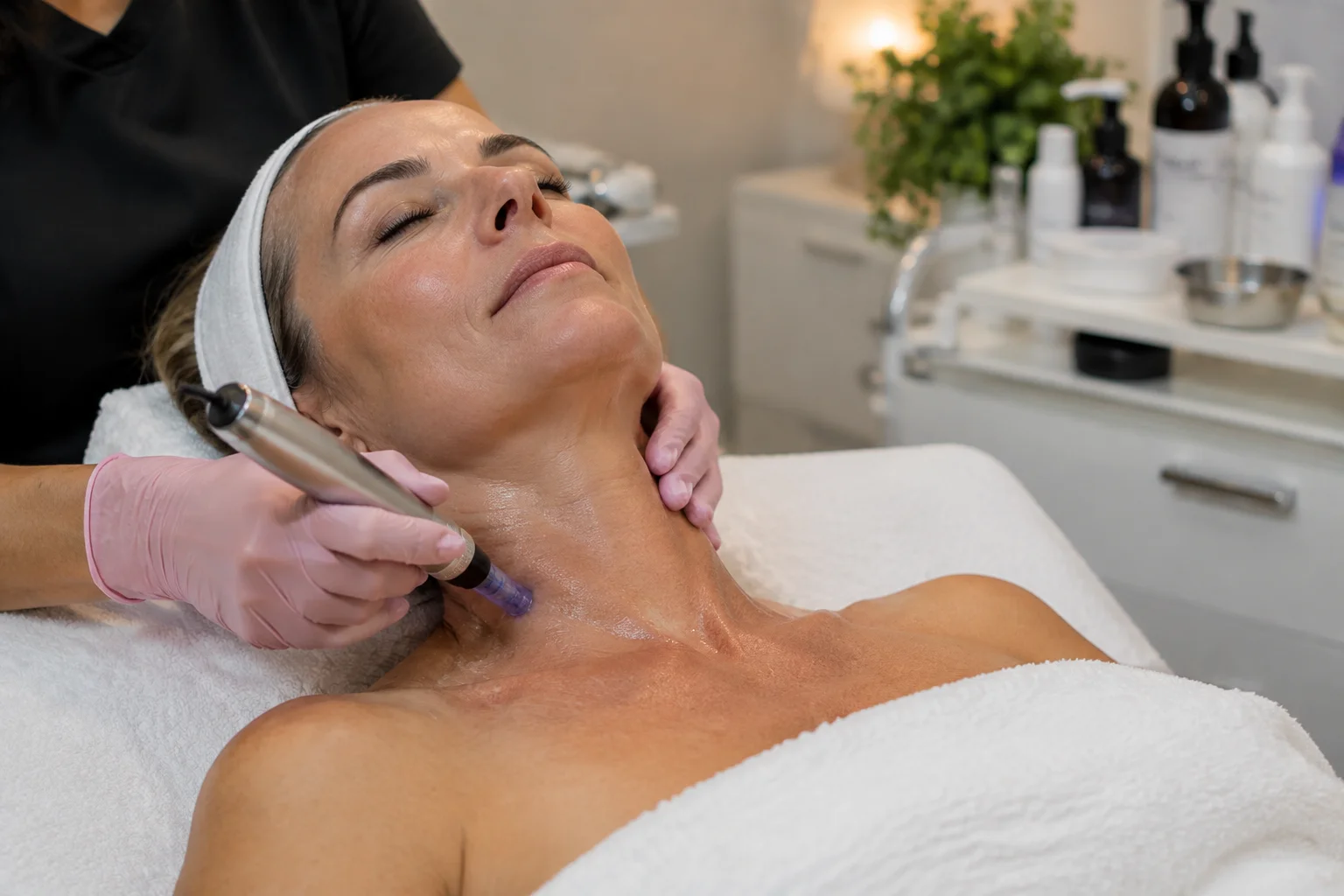
The Microneedle Neck And Chest Add-On at Heather's Luminous Esthetics adds neck and chest microneedling to an existing microneedling appointment. It expands the treatment area rather than functioning as a separate facial or a stand-alone booking.
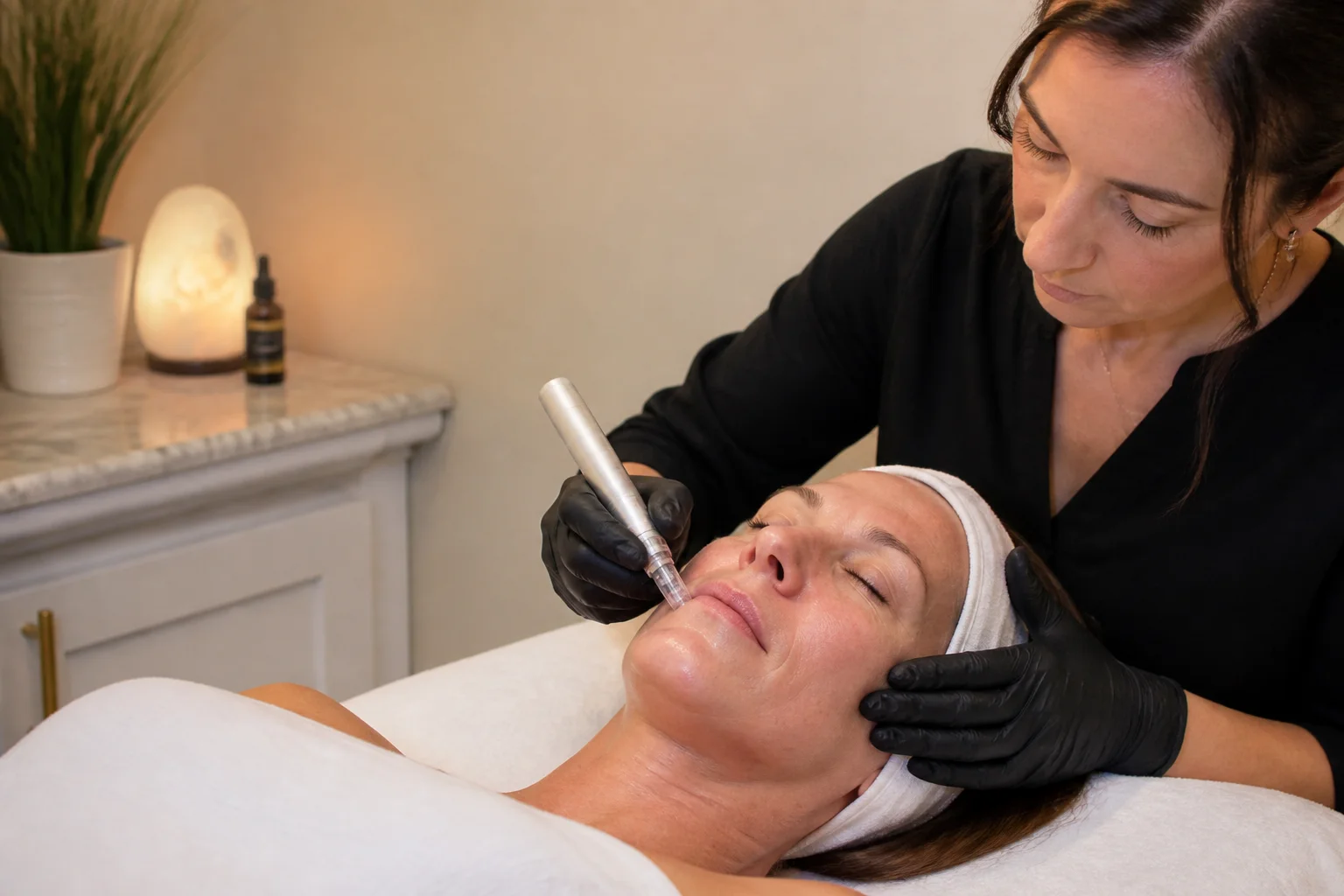
Microneedling uses fine needles to create controlled punctures in the skin. This process stimulates a healing response associated with collagen remodeling. The intended benefit is gradual improvement in skin quality, not an immediate lifting effect.
Before booking, confirm the added appointment time, cost, areas covered, and whether the add-on is appropriate for your skin. Device choice, treatment depth, comfort measures, and aftercare should be discussed with your provider rather than assumed from the service name.
Benefits worth considering, without the big promises
Smoother-looking texture and softer fine lines
Microneedling may help improve fine lines and uneven texture over a series of treatments. For some clients, that includes a modest improvement in the crepey appearance of neck or chest skin. Results depend on factors such as skin condition, treatment settings, healing response, and ongoing sun exposure.
A more coordinated approach to skin quality
If you already receive facial microneedling, including your neck and chest can help your care plan address visible areas together. The goal is not to make every area look identical. It is to avoid treating facial concerns while overlooking similar concerns just below the jawline.
Clear limits around discoloration and loose skin
Some uneven tone may improve, but microneedling is not a universal treatment for brown spots, melasma, redness, or sun damage. It does not reverse all effects of ultraviolet exposure or replace skin cancer screening. Significant laxity and deeper folds may need a different approach, and pigment-prone skin requires particular caution.
Who may be a good candidate?
A suitable candidate generally has healthy skin in the treatment area, realistic goals, and enough flexibility to follow recovery instructions. Mild texture changes and fine lines may be reasonable concerns to discuss. Age alone does not determine whether this add-on is a good fit.
Your provider should review your skin history, medications, previous cosmetic procedures, and healing tendencies. Mention eczema, psoriasis, frequent cold sores, a history of raised scars, pigment changes after irritation, and any condition or medication that affects immunity or wound healing.
Active infection, open skin, sunburn, or an inflammatory flare in the treatment area generally means postponing treatment. Pregnancy, nursing, recent isotretinoin use, blood-thinning medication, and certain medical conditions warrant an individualized safety review. Never stop a prescribed medication just to prepare for an esthetics appointment.
All skin tones need careful assessment. People prone to post-inflammatory hyperpigmentation should ask specifically about that risk and the provider's experience with similar skin. A suspicious or changing lesion should be evaluated by a medical professional before cosmetic treatment.
Preparing your skin and your Tucson schedule
Start with a calm skin barrier
Arrive with skin that is comfortable, not sunburned, peeling, or irritated. Keep cleansing gentle and moisturize consistently beforehand. Let your provider know if a new product causes stinging or redness, even if you started it to get your skin ready.
Ask when to pause retinoids, exfoliating acids, scrubs, and other potentially irritating products. The timing depends on the product and your treatment plan. Also disclose recent waxing, dermaplaning, peels, laser treatments, or injectables so appointments can be spaced appropriately.
Leave room for recovery
Avoid scheduling immediately before a wedding, portrait session, or trip with substantial outdoor time. Redness may settle within a few days, but dryness, sensitivity, or flaking can last longer. A first treatment deserves extra breathing room because you do not yet know your recovery pattern.
Think through your actual calendar. A weekend hike in the Catalina foothills, an outdoor sporting event, or a pool day may make another appointment date more practical. Necklines matter, too: soft, loose clothing is preferable to a collar that rubs freshly treated skin.
During the appointment
Your visit should include a review of your goals and any changes in your health, medications, or skin since booking. The provider assesses the neck and chest, cleanses the treatment area, and explains the planned approach. Ask about numbing or other comfort measures before treatment begins.
Sensations vary, but clients may notice prickling, vibration, warmth, or discomfort. These areas can feel different from the face, so speak up if something feels more intense than expected. Treatment settings should reflect the area and your skin, not a fixed idea that stronger treatment produces better results.
Temporary redness, tenderness, and sometimes pinpoint bleeding can occur. Before leaving, make sure you understand which products to use, what activities to avoid, when to restart your usual routine, and how to contact the business with recovery concerns.
Aftercare in dry desert air
Keep products simple and provider-approved
Freshly treated skin does not need an ambitious product routine. Follow the specific cleansing and moisturizing instructions you receive, and use only products your provider approves for post-treatment skin. A serum that feels fine on an ordinary day may sting or irritate after microneedling.
Avoid scrubs, exfoliating acids, retinoids, and fragranced products until cleared to resume them. Do not pick at flakes or rub the area with a washcloth. In Tucson's low humidity, tightness can be noticeable, but adding multiple active products is not the answer.
Manage sunlight, heat, sweat, and friction
Limit direct sun exposure during recovery. Ask when sunscreen can be applied, then use a tolerated broad-spectrum SPF 30 or higher as directed. Shade and clean, soft clothing that covers the treatment area are useful, especially while skin is sensitive. A wide-brimmed hat alone does not reliably shield the chest.
Your provider may temporarily restrict strenuous exercise, saunas, hot showers, swimming, and activities that cause heavy sweating. Follow their timing rather than assuming you are ready once redness fades. Avoid necklaces or rough fabrics that rub the treated areas.
Mild redness and tightness should generally improve rather than intensify. Increasing pain, spreading redness, unusual warmth, pus, blistering, or fever needs prompt medical advice. Do not treat worsening symptoms as a sign that the procedure is working.
How long recovery and results can take
During the first few days, the most noticeable changes may be redness, sensitivity, and temporary swelling. Mild dryness or flaking can follow. Recovery varies with treatment intensity, the area treated, your skin, and how closely you follow aftercare.
Early plumpness is not the same as lasting collagen-related improvement. More meaningful texture changes develop over subsequent weeks, and remodeling can continue for several months. The neck and chest may respond differently from your face.
A series is often discussed, with sessions commonly spaced around four to six weeks or longer depending on the protocol and healing. That range is not a booking prescription. Your provider should reassess the skin before each session and allow more time when needed.
Photographs taken in consistent lighting can make gradual progress easier to judge. Avoid comparing a single treatment with filtered images or dramatic online before-and-after photos. Some clients see subtle changes, and some concerns respond better to another treatment.
Maintenance starts between appointments
The most useful maintenance habits are often straightforward: gentle cleansing, suitable moisturizer, consistent sun protection, and avoiding repeated irritation. Include the neck and exposed chest when applying sunscreen, and reapply according to the label, especially during outdoor time or after sweating.
Once skin has recovered, your provider can help you decide which home-care ingredients fit your goals. Do not assume a strong facial product belongs on your neck at the same frequency. Adjustments may be needed for comfort and tolerance.
Maintenance treatment frequency should reflect your response, priorities, budget, and exposure habits. More frequent microneedling is not automatically better. If improvement is limited, reassessing the approach is more useful than simply adding appointments.
How this fits alongside other skincare services
Microneedling and dermaplaning serve different purposes. Dermaplaning removes surface buildup and fine facial hair, while microneedling targets a controlled healing response. The guide to dermaplane add-ons in Tucson can help you understand that distinction before choosing a service.
If your immediate priority is facial upkeep rather than neck and chest texture, the Dermaplane Glow Facial may be worth discussing. A Deluxe Custom Luminous Facial is another service to ask about when building a personalized routine. These options are not substitutes for one another, and exfoliating services should not be stacked around microneedling without guidance.
Booking with your goals in mind
When asking about a Microneedle Neck And Chest Add-On in Tucson, describe what you notice most: fine lines, rough texture, crepiness, or uneven color. Mention upcoming travel, outdoor commitments, and products you already use. Those details help shape a safer, more realistic plan.
Review the neck and chest microneedling service at Heather's Luminous Esthetics and confirm how to include it with your existing microneedling appointment. The right plan should fit your skin, your recovery needs, and everyday life in Pima County, not just the next available opening.
Book Microneedle Neck And Chest Add-On in Tucson, AZ
If you are looking for Microneedle Neck And Chest Add-On in Tucson, AZ, visit our service page or contact us to schedule your appointment.
Serving Clients in Tucson, AZ
Heather's Luminous Esthetics proudly serves clients throughout Tucson, AZ.
Frequently Asked Questions
Can I book the Microneedle Neck And Chest Add-On by itself?
How much downtime should I plan for after neck and chest microneedling?
Will microneedling remove sun damage and tighten loose neck skin?
Related Articles
Article Gallery