In Tucson, sleeveless weather lasts well beyond summer. Between warm commutes, outdoor plans, and workouts, underarm grooming can become something you think about almost daily. If shaving leaves you with prickly regrowth or frequent razor irritation, waxing may offer a welcome change.
At Heather's Luminous Esthetics, the goal of an underarm wax in Tucson, AZ is straightforward: remove unwanted hair for soft, smooth underarms. Getting a good result also involves choosing the right timing, understanding your skin, and giving it a little extra care afterward. Here is a closer look at how this small service can fit into a practical desert skincare routine.
What Changes When You Wax Instead of Shave?
Shaving cuts hair at the skin's surface. Waxing removes hair from the root, which generally gives you a longer interval before noticeable regrowth. That difference can mean fewer grooming sessions and less exposure to repeated razor friction. For someone who shaves frequently, the appeal is often convenience as much as appearance.
Waxing is not automatically irritation-free, though. Pulling hair from the root creates temporary stress on the skin, and sensitive underarms may look pink or feel tender afterward. Some people find waxing more comfortable overall than repeated shaving, while others prefer a different removal method. Your previous reactions, skin condition, and aftercare habits help determine whether it is a good fit.
Smoother Does Not Mean Permanently Hair-Free
Underarm waxing offers temporary hair removal, not permanent hair reduction. Regrowth may feel softer than freshly shaved stubble because new hair does not have the same blunt, cut edge. However, hair thickness and density vary, and waxing cannot promise that your hair will become sparse. It also does not stop sweating, replace deodorant, or treat underarm discoloration.
Why Tucson's Climate Belongs in the Conversation
Dry desert air can leave skin feeling tight, even in an area that also gets sweaty. Underarms experience a particular combination of moisture, friction, product buildup, and occasional dryness. Add a close-fitting shirt or a hot afternoon outdoors, and freshly waxed skin may feel more reactive than expected.
Tucson's strong sun matters, too. Underarms are often covered, but sleeveless clothing and overhead arm movements can expose them. After waxing, prioritize shade and clothing coverage rather than planning extended direct sun exposure. If the area will be exposed once it has settled, use a broad-spectrum sunscreen your skin tolerates. Avoid applying a product that stings freshly treated skin.
Local aftercare does not need to be complicated. Think about your actual schedule: a midday walk across a sunny parking lot, an outdoor job, or an evening fitness class. Booking when you can keep the area cool and minimize rubbing is often more useful than choosing an appointment solely because it fits an open calendar slot.
Is Underarm Waxing a Good Match for Your Skin?
You may be a good candidate if you want a break from shaving, have enough hair growth for wax to grip, and have healthy, intact underarm skin. People who dislike daily stubble often appreciate the smoother interval between visits. You should also be comfortable allowing some regrowth before each appointment.
Postpone waxing if the area is sunburned, raw, peeling, infected, or affected by an active rash. Open cuts and painful bumps also deserve attention before hair removal. If a bump is deep, recurring, or draining, seek medical advice rather than assuming it is an ingrown hair. A waxing service is not a treatment for an underlying skin condition.
Share Medications and Recent Skin Treatments
Tell your esthetician about prescription skincare, recent peels, exfoliating acids, and any medication that affects skin fragility or healing. Oral isotretinoin and retinoids used on the treatment area are especially important to disclose because waxing may damage vulnerable skin. Do not stop prescribed medication on your own. Ask your prescriber and esthetician whether waxing is appropriate and whether you need to wait.
Also mention previous skin lifting, adhesive allergies, eczema, or strong reactions to waxing products. Personalized care means using that information to guide the appointment, including deciding not to wax when necessary. For more on why this conversation matters, read A More Personal Approach to Underarm Waxing in Tucson.
How to Prepare Without Overdoing It
Let the Hair Reach a Workable Length
Around one-quarter inch of growth is a common target, roughly the length of a grain of rice. For many people, that means allowing about two weeks after shaving, though growth rates differ. Hair that is too short may not come away evenly. If you are unsure whether your hair is ready, ask before booking rather than shaving again and restarting the process.
Keep Your Routine Gentle
Arrive with clean underarms and, if practical, avoid heavy lotion, oil, or deodorant immediately before the visit. Let your esthetician know if you are wearing product so the area can be prepared appropriately. Skip vigorous scrubbing and avoid trying new acids or fragranced products shortly before waxing. You do not need to aggressively exfoliate to get a good result.
Choose a loose, breathable top that will not press into your underarms afterward. If you have a workout, swimming session, or long outdoor errand planned, consider doing it on another day. For a first appointment, allow several days before an important event so you can learn how your skin responds without feeling rushed.
A Realistic Look at the Appointment
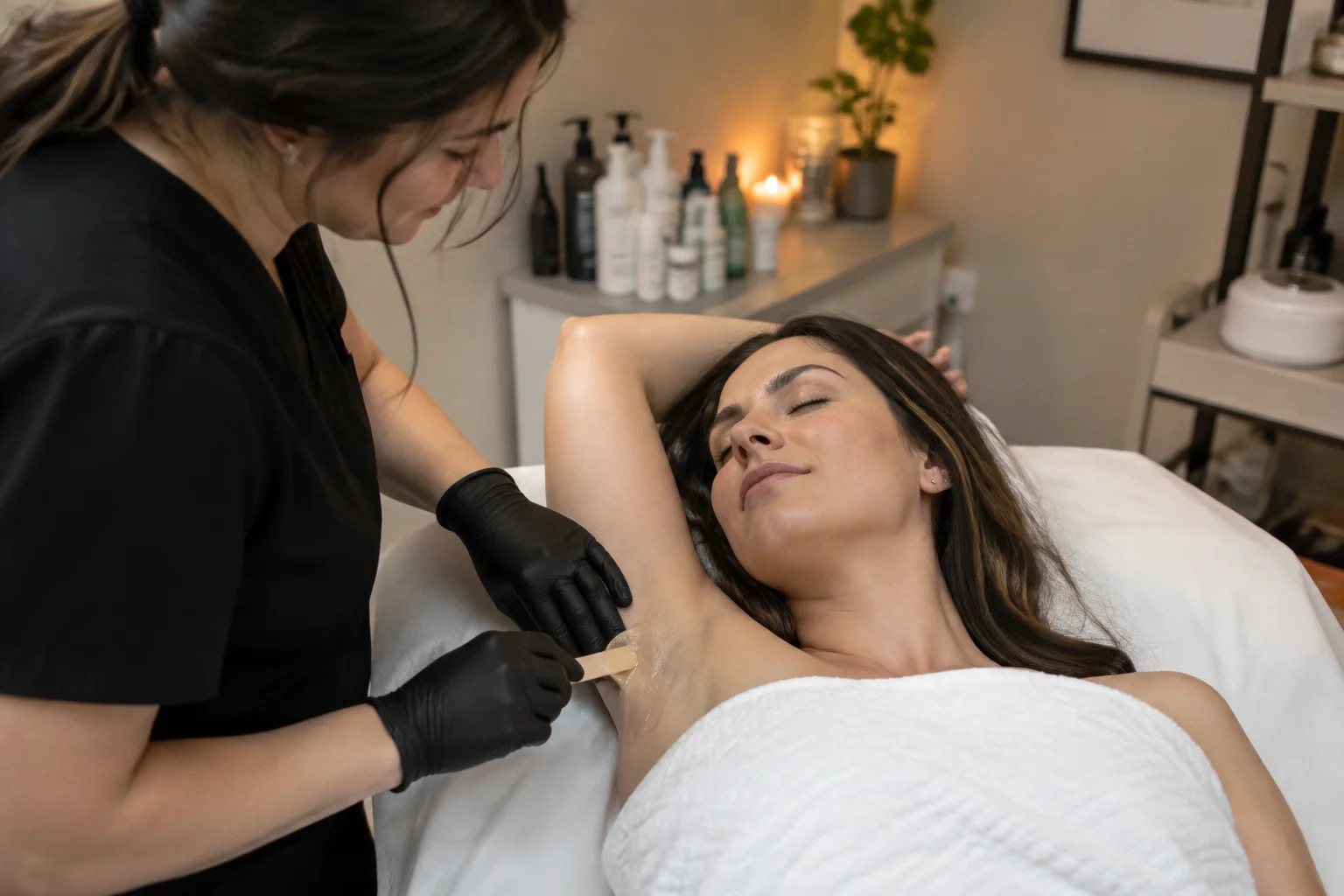
Underarm waxing is generally a brief service, but preparation and a skin check still matter. Your esthetician should review relevant concerns, assess the area, and cleanse the skin before applying wax. Underarm hair often grows in more than one direction, so it may be removed in smaller sections rather than with a single pull.
You will usually raise your arm so the skin can be held taut. Expect a short, sharp sensation during removal rather than a completely painless experience. Sensitivity varies with hair density, skin condition, and individual pain tolerance. Say something if the wax feels too hot or the discomfort feels unusual. There is no benefit to silently tolerating a problem.
A few hairs may remain, particularly at a first visit when growth lengths are uneven. Repeatedly waxing the same patch to chase every hair can increase irritation, so protecting the skin takes priority over absolute perfection. Temporary redness and small raised spots around follicles can occur and often settle within hours, though sensitive skin may take longer.
The First 24 to 48 Hours: Less Is Usually Better
Follow the specific aftercare guidance you receive, adjusting activities until the skin feels calm. A useful general approach is to minimize heat, sweat, friction, and irritating products for the first 24 to 48 hours. This is especially relevant in Tucson, where a short outdoor activity can quickly become a sweaty one.
Keep Heat and Rubbing to a Minimum
Skip hot tubs, saunas, very hot showers, and strenuous exercise immediately afterward. Avoid swimming while the area is tender or irritated. A lukewarm rinse and loose clothing are usually kinder than scrubbing or tight athletic fabric. If the skin feels warm, a clean, cool compress may help. Do not apply ice directly to the skin.
Be Selective About Deodorant and Moisturizer
Deodorants and antiperspirants can sting freshly waxed skin, especially formulas with fragrance, alcohol, or exfoliating acids. Your esthetician may recommend leaving them off initially and restarting once the area is comfortable, often after about 24 hours. If a product burns, rinse it away gently. A small amount of a bland, fragrance-free moisturizer may help dryness if tolerated, but avoid layering several products.
Keep hands away from the area, and do not pick at bumps or dig for trapped hairs. Seek medical advice for spreading redness, worsening pain, increasing warmth, pus, or fever. Those symptoms are different from mild, short-lived post-wax sensitivity and should not be managed by adding more exfoliation.
Maintaining Results Between Visits
Many people schedule underarm waxing approximately every three to four weeks, but your ideal interval may be shorter or longer. The deciding factors are your growth rate, the hair length needed for removal, and how your skin handles the service. A first wax may not stay uniformly smooth as long as you expected because not every hair is at the same growth stage.
Try to avoid shaving between appointments if you want to maintain a consistent waxing schedule. Shaving does not make hair grow thicker, but it can leave hair too short for your next wax. If you need to shave for a particular occasion, simply discuss the timing and allow enough regrowth before returning.
Once tenderness and redness have fully resolved, gentle exfoliation may help some people manage surface buildup and ingrown hairs. Start conservatively and ask which method suits your skin. Strong acids and rough scrubs can make irritation and dark marks worse. Consistency with mild care is more useful than trying to scrub your way to perfectly smooth skin.
Make the Service Fit Your Skincare Goals
A good waxing plan starts with a specific goal. Perhaps you want fewer razor passes, smoother skin for sleeveless clothing, or a grooming routine that requires less daily attention. Those are realistic reasons to consider waxing. Treating persistent pigmentation, recurring inflamed bumps, or excessive sweating requires a different conversation and may call for a medical professional.
Self-care can also include separate services for separate concerns. If facial dryness or texture is on your mind, you can explore the Deluxe Custom Luminous Facial and ask what is appropriate for your facial skin. Facial treatments and underarm waxing address different areas, so neither should be presented as a substitute for the other.
For ideas about keeping appointments manageable, how underarm waxing fits into Tucson self-care routines offers another perspective. The most sustainable routine is one that suits your budget, schedule, comfort level, and willingness to let hair grow between visits.
Choosing Your Next Underarm Wax in Tucson
When comparing waxing options in Tucson and across Pima County, look beyond proximity. Clear preparation advice, attention to hygiene, and a willingness to discuss skin sensitivities matter. Ask about appointment length, current pricing, and what to do if you have reacted to waxing before. Product choice and technique should account for your skin rather than assume every client needs the same approach.
To take the next step with Heather's Luminous Esthetics, visit the underarm waxing service page. Share your current hair length, any underarm irritation, and your upcoming plans when arranging a visit. With sensible timing and gentle aftercare, you can decide whether waxing gives you the smoother, lower-maintenance routine you are looking for.
Book Underarm Wax in Tucson, AZ
If you are looking for Underarm Wax in Tucson, AZ, visit our service page or contact us to schedule your appointment.
Serving Clients in Tucson, AZ
Heather's Luminous Esthetics proudly serves clients throughout Tucson, AZ.
Frequently Asked Questions
How long should underarm hair be before a waxing appointment?
Can I wear deodorant after an underarm wax?
How often should I book an underarm wax in Tucson?
Related Articles
Article Gallery