Underarm hair removal might take up only a small part of your beauty routine, but the skin underneath deserves attention. If shaving leaves you with stubble, tenderness, or a cycle of bumps, the goal probably is not simply to remove hair. It is to find a routine your skin can live with comfortably.
For clients considering an underarm wax in Tucson, AZ, personalization starts with that distinction. Your hair growth, product use, sensitivity, and daily activities all matter. At Heather's Luminous Esthetics, the underarm wax service offers an option for smooth, hair-free underarms. Thinking of it as part of your skincare plan helps you make better decisions before and after your appointment.
Start with the result you actually want
Two people can book the same service for different reasons. One wants fewer mornings spent shaving. Another wants a smoother feel in sleeveless clothing. Someone else is hoping to reduce the irritation that follows frequent razor use. Those goals deserve slightly different conversations.
Waxing removes hair from the root rather than cutting it at the skin's surface. That usually gives you a longer interval before noticeable regrowth than shaving. It can also reduce how often you expose the area to a razor, which may help if repeated shaving contributes to irritation.
Still, waxing is not automatically gentler for every person. It briefly stresses the skin and can cause redness, tenderness, ingrown hairs, or follicle irritation. A useful consultation weighs those possibilities against your current routine rather than promising that one method will solve everything.
Smoothness and skin health are related, but different
Hair-free skin is not necessarily healthier skin, and keeping underarm hair is perfectly normal. Waxing is a grooming choice. It does not detoxify the area, stop sweating, or treat an underlying skin condition. If your goal is comfort, judge the results by how your skin feels between visits, not just how it looks immediately afterward.
Why Tucson weather belongs in the conversation
Tucson's dry air can leave skin feeling tight, especially when you combine frequent washing, fragranced products, and friction. Underarms also experience their own microclimate: perspiration, skin folds, and clothing can keep the area warm and damp even when the surrounding air is dry.
That combination matters after waxing. A long outdoor shift, an afternoon hike in the foothills, or a sweaty drive home in summer can add heat and rubbing while the area is temporarily sensitive. Scheduling around those activities may be more helpful than buying another aftercare product.
Sun exposure deserves attention, too. Underarms are often covered, but swimming, sunbathing, and certain sleeveless activities can expose them. Avoid deliberate sun exposure on freshly waxed skin. Use shade and clothing first, and follow your esthetician's guidance about applying a tolerated sunscreen to exposed skin once the area is comfortable.
Personalization begins with a few honest questions
Before an appointment, think about what happens after your usual hair removal method. Do bumps appear immediately or several days later? Does deodorant sting? Is one underarm more sensitive than the other? These details are more useful than simply describing your skin as sensitive.
Share your recent product use, previous waxing reactions, and any relevant medical conditions or medications. Underarm skincare now includes everything from acid-based deodorants to brightening serums, and some of those products can make waxing less predictable.
A personal approach also means discussing priorities. If you have a special event coming up, the plan may focus on leaving enough recovery time. If your main concern is recurring irritation, the first step may be simplifying your home routine. Our post on a more personal approach to underarm waxing in Tucson explores why that conversation matters.
Who may be a good candidate, and who should wait?
Underarm waxing may suit people who want longer-lasting smoothness than shaving and can let their hair grow enough for wax to grip. It can be appealing when daily shaving feels inconvenient or repeatedly causes discomfort. You do not need perfectly trouble-free skin, but the treatment area should be intact and calm.
Give irritated skin time to recover
Postpone waxing over sunburn, broken skin, an active rash, or a suspected infection. An eczema flare or significant razor irritation is also a reason to check in before proceeding. Removing hair from already inflamed skin can make the problem worse.
Tell your esthetician if you use retinoids on the area or take isotretinoin, since these can increase the risk of skin injury with waxing. Other medications and health conditions may affect skin fragility or healing. Do not stop prescribed medication on your own; ask the prescribing clinician whether waxing is appropriate.
Persistent painful lumps, draining bumps, or recurring deep inflammation need medical evaluation rather than repeated hair removal. Likewise, new or unexplained darkening should not be assumed to be a cosmetic issue. An esthetician can help with grooming choices, but cannot diagnose the cause.
Prepare for your appointment without overdoing it
The most important preparation is allowing enough hair growth. Around one-quarter inch is a common target, although your esthetician may recommend something different based on the hair and wax used. For many people, that means roughly two to three weeks after shaving, but growth rates vary.
If you are unsure whether the hair is long enough, ask before your visit rather than trimming it very short. Hair that is too short may not lift effectively, leaving a less even result. There is no need to feel embarrassed about growing it out; that is part of the process.
Arrive with clean skin and avoid layering on oils, heavy creams, or deodorant immediately beforehand unless the business gives different instructions. Skip aggressive scrubbing. Ask how far in advance to pause exfoliating acids or other potentially irritating products used directly on the underarms.
Choose a loose, breathable top for afterward. If possible, schedule your workout before your appointment and allow time to cool down and shower. In Tucson's hotter months, a quieter evening after waxing can make aftercare much easier to follow.
The appointment and the first few days
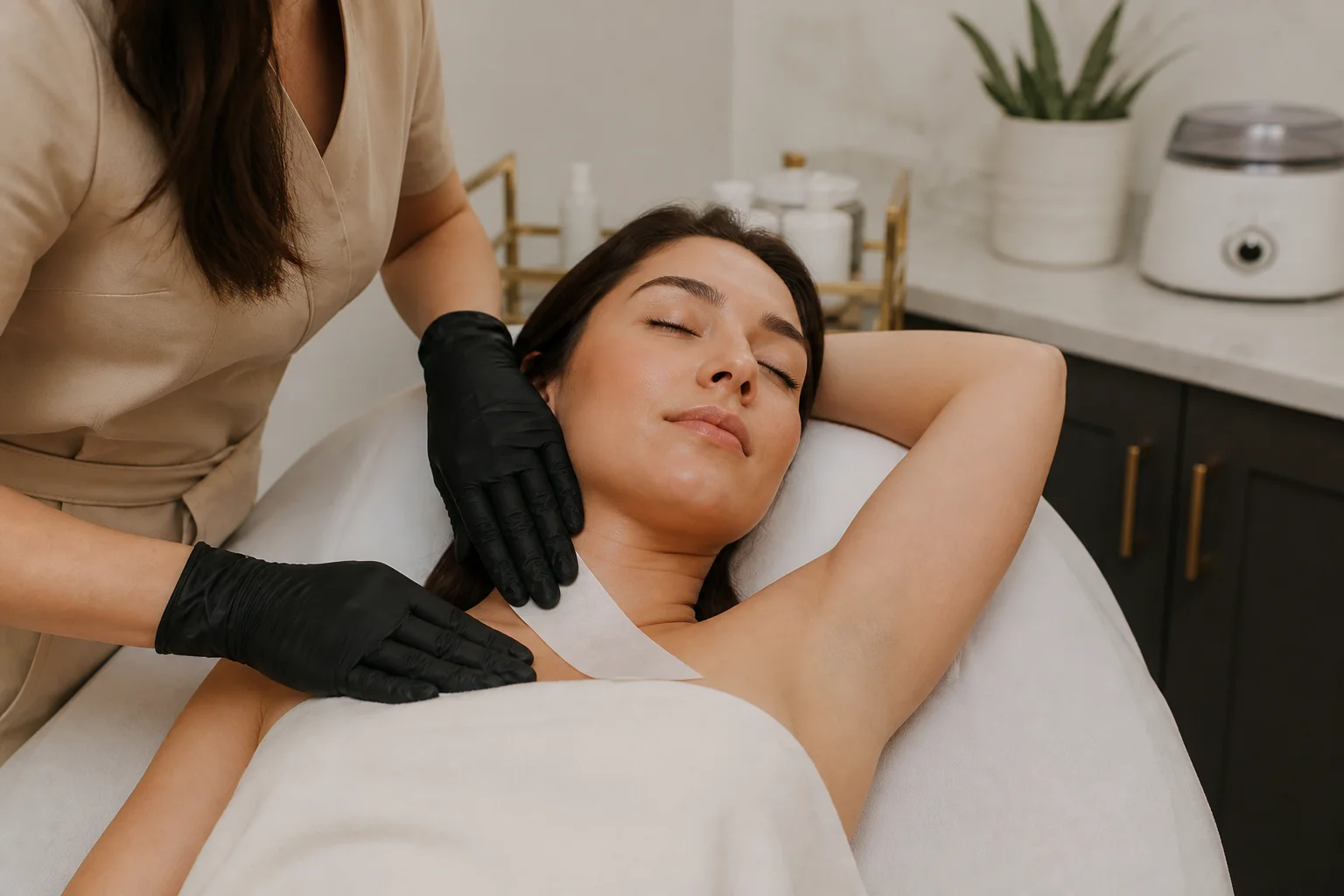
Underarm waxing is generally a short service, but preparation and a skin check should not feel rushed. The area is typically cleansed, wax is applied in sections, and unwanted hair is removed. Underarm hair may grow in more than one direction, which can affect how the area is worked.
Expect a brief pulling or stinging sensation during removal. Your comfort level can vary with hair density, skin condition, and individual sensitivity. Let your esthetician know if the skin feels unusually hot or painful. Speaking up is part of good care, not an inconvenience.
Keep the recovery timeline realistic
Mild redness or tenderness can occur immediately afterward and often settles within several hours, though some people remain sensitive into the next day or two. The first wax may leave some shorter hairs behind because not every hair is long enough to grip. A completely uniform result is not guaranteed.
Plan your first appointment several days before an important event instead of the morning of it. That gives you room to learn how your skin responds. If redness worsens, pain increases, or you develop spreading warmth, pus, or other signs of infection, seek medical advice.
Aftercare should be simple enough to follow
Freshly waxed underarms usually benefit from a short break from heat, friction, and potentially irritating products. Follow your esthetician's instructions; commonly, that means avoiding strenuous exercise, hot tubs, saunas, and swimming for about 24 to 48 hours, and longer if the skin remains irritated.
Wash gently with lukewarm water and a mild cleanser, then pat dry. Avoid scrubbing, picking, and repeated touching. A small amount of a bland, fragrance-free moisturizer may help if the area feels dry and the product is well tolerated. More product is not necessarily better.
Make a practical deodorant plan
Deodorants and antiperspirants may sting after waxing, especially formulas containing fragrance, alcohol, or exfoliating acids. Ask when to restart your usual product. If possible, plan your appointment when you can give the area a brief product-free break rather than immediately heading into a hot, active day.
Once the skin has settled, reintroduce products cautiously. A formula labeled natural is not automatically less irritating, and baking soda or essential oils can bother some people. Your own response matters more than the label.
Maintenance is about your growth cycle, not a rigid rule
Many clients schedule underarm waxing about every three to four weeks, while others need a shorter or longer interval. The right timing depends on how quickly hair returns, how much regrowth you tolerate, and whether there is enough length for effective removal.
Results often last for several weeks, but smoothness is not identical throughout that time. You may notice a few hairs before substantial regrowth appears. Waxing does not permanently remove hair, and it cannot guarantee that future growth will be finer or lighter.
If you can, avoid shaving between appointments when your goal is a consistent waxing routine. Shaving changes the available hair length and may make your next result less even. If you do shave, simply tell your esthetician and adjust the next appointment accordingly.
After tenderness has fully resolved, ask whether gentle exfoliation would help your skin. Do not start scrubbing freshly waxed underarms to prevent ingrown hairs. Some clients tolerate occasional gentle exfoliation; others do better with less. For scheduling ideas, read about fitting underarm waxing into a Tucson self-care routine.
Keep broader skincare goals in perspective
If discoloration is your main concern, set expectations carefully. Removing hair can change the appearance of visible stubble or shadow, but waxing is not a pigmentation treatment. Irritation from any hair removal method can sometimes worsen discoloration, particularly in skin prone to post-inflammatory pigment changes.
The same personalized thinking applies elsewhere in your routine. If facial breakouts are a separate concern, you can explore the Acne Customized Facial rather than assuming underarm bumps need the same products. If you are considering a Full Face Wax, discuss facial skincare separately, since retinoids and exfoliants used there may change candidacy.
Choose a Tucson waxing routine that fits your actual life
When comparing underarm waxing options near you in Tucson or elsewhere in Pima County, look beyond convenience alone. Ask how skin concerns are screened, what preparation is recommended, and whether aftercare can accommodate your work, exercise, and outdoor schedule.
At Heather's Luminous Esthetics, start with the underarm wax service page and bring your questions about sensitivity, regrowth, or product use. A useful goal is straightforward: smoothness you enjoy, a recovery window you can manage, and a maintenance plan that respects your skin.
Book Underarm Wax in Tucson, AZ
If you are looking for Underarm Wax in Tucson, AZ, visit our service page or contact us to schedule your appointment.
Serving Clients in Tucson, AZ
Heather's Luminous Esthetics proudly serves clients throughout Tucson, AZ.
Frequently Asked Questions
How long should underarm hair be before a wax?
Can I work out after underarm waxing in Tucson?
Will underarm waxing help with razor bumps or dark underarms?
Related Articles
Article Gallery