A good skincare routine should make room for what you enjoy, whether that is a bare face, a little tinted sunscreen, or makeup for a night downtown. If facial hair gets in the way of the finish you prefer, full face waxing can be a useful addition. The key is treating it as part of your skincare calendar, not something separate from it.
For clients in Tucson, that means considering more than hair growth. Dry air, strong sun, exfoliating products, and upcoming treatments all affect timing. At Heather's Luminous Esthetics, the Full Face Wax service addresses unwanted hair across the brows, upper lip, chin, cheeks, and jawline. Here is how to decide whether it fits your goals and how to care for your skin around an appointment.
What full face waxing can change, and what it cannot
Waxing removes hair from the root rather than cutting it at the surface. For someone bothered by peach fuzz or more noticeable facial hair, that can mean a smoother feel and less frequent upkeep than daily shaving. Treating several areas together can also create a more consistent finish across the face.
A smoother surface for makeup
Foundation and concealer can catch on facial hair, particularly in bright daylight. Removing that hair may help makeup sit more evenly and make blending easier. Once your skin has settled after waxing, you may find that you need less effort to achieve your preferred finish.
That does not mean waxing corrects every kind of texture. It does not treat acne scars, enlarged pores, pigmentation, or dehydration. Dry patches still need barrier-supporting care, and breakouts may need their own treatment plan. Smooth skin is a reasonable goal; poreless or permanently hair-free skin is not.
Less frequent hair removal
Because hair is removed from the root, results generally last longer than shaving. The exact interval varies with hair type, growth cycles, and whether hairs were long enough to be removed effectively. Some regrowth may appear sooner than expected because not every hair grows on the same schedule.
Waxing does not make hair grow back thicker, but it also cannot promise permanent thinning. For another perspective on everyday benefits, read how full face waxing supports smoother skin goals in Tucson.
Healthy skin matters more than a full-face label
A full face wax may suit clients who want to remove unwanted hair from several facial areas and whose skin is calm and intact. It is not automatically the right choice for everyone, or for every area of the face at every visit. A patch of irritation can change the plan even if you have waxed comfortably before.
Waxing can cause temporary redness, tenderness, bumps, or follicle irritation. Less commonly, it can lift skin or lead to lingering discoloration. Tell your esthetician if you have reacted to waxing before, develop dark marks after irritation, or have known allergies to skincare ingredients. A small test area may be useful, although it cannot rule out every reaction.
When to postpone or ask for guidance
Sunburn, peeling, open skin, active cold sores, and irritated breakouts are reasons to avoid waxing affected areas. Eczema or rosacea flares also deserve extra caution. If your skin stings when you apply a plain moisturizer, that is worth discussing before the appointment rather than hoping the wax will go well.
Retinoids, including retinol, adapalene, and tretinoin, can increase the risk of skin lifting with waxing. Oral isotretinoin requires particular caution, including after treatment ends. Disclose these medications and products when booking. Do not stop a prescription on your own; ask your prescriber and esthetician whether waxing is appropriate and what waiting period applies.
Why Tucson weather belongs in the conversation
Tucson's dry air can leave skin feeling tight even when it looks oily. Add air conditioning, wind, and time outside, and you may arrive for a wax with more surface dryness than you realize. Waxing over compromised skin can make an otherwise routine service less comfortable.
In the days before your appointment, focus on gentle cleansing and a moisturizer your skin already tolerates. There is no need to buy an elaborate new routine. Avoid experimenting with strong actives or scrubs just before waxing, especially if your cheeks or upper lip are already flaky.
Sun exposure matters too. Schedule thoughtfully around a Sabino Canyon hike, an outdoor gathering, or an afternoon by the pool. Freshly waxed skin may be more reactive, and inflammation followed by sun exposure can contribute to discoloration. Shade, a broad-brimmed hat, and a tolerated broad-spectrum SPF 30 or higher are practical parts of aftercare in Pima County.
Build a little breathing room into your calendar
Before a special event
A first wax is best treated as a trial, not a last-minute beauty fix. Leave several days before an important event, and consider a separate trial appointment well ahead of a wedding or photo session. Your skin may settle quickly, but temporary bumps or redness can last longer than you expect.
Even experienced clients should avoid assuming that same-day waxing and full makeup will work together. If you know your usual recovery pattern, use it to guide scheduling. If you do not, give your skin extra room rather than choosing the latest available appointment before an event.
Between skincare treatments
Facial waxing should be coordinated with chemical peels, resurfacing treatments, and microneedling. These can all affect the skin barrier, so stacking them closely may increase irritation. The appropriate gap depends on the treatment, its intensity, your products, and how completely your skin has recovered.
If you are considering a Custom Luminous Facial, ask how its specific steps fit around waxing. A gentle, hydration-focused plan is different from an exfoliating one. Likewise, discuss separate timing for a Microneedling Renewal Treatment rather than assuming both services belong in the same visit.
How to prepare without overdoing it
Let the hair grow enough for the wax to grip. Around one-quarter inch is a common guideline for waxing, although fine facial hair may be assessed differently. If you have recently shaved, dermaplaned, or tweezed, ask whether there is enough regrowth before coming in. Very short hairs can be difficult to remove completely.
Share your actual product list, not just the names of brands. Retinoids, exfoliating acids, benzoyl peroxide, and strong at-home peel products are especially relevant. Your esthetician can discuss what needs to be paused and for how long, with prescriber guidance where necessary. There is no single pause schedule that makes every product and skin type safe.
Arrive with clean skin if practical, and avoid heavy makeup over the areas being waxed. Do not scrub your face to prepare it or try to remove every dry flake. Mention recent sun exposure, medications, previous reactions, and upcoming plans. Those details help make the appointment more personal and safer.
Inside a full face waxing appointment
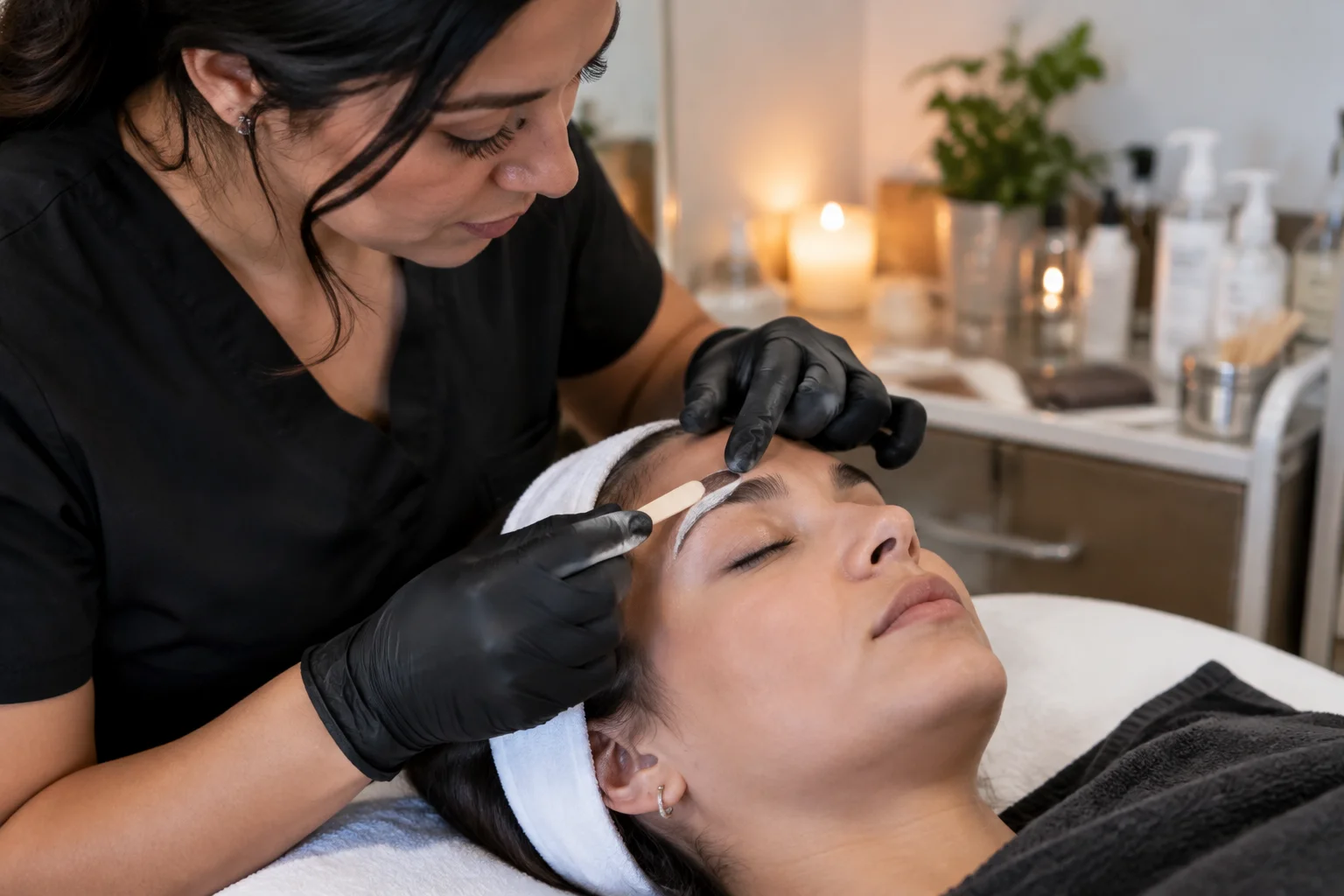
The service should start with a conversation about your goals and a look at your skin. This is the time to clarify which areas you want treated and how you prefer your brows to look. Removing unwanted hair does not have to mean changing the shape or character of your face.
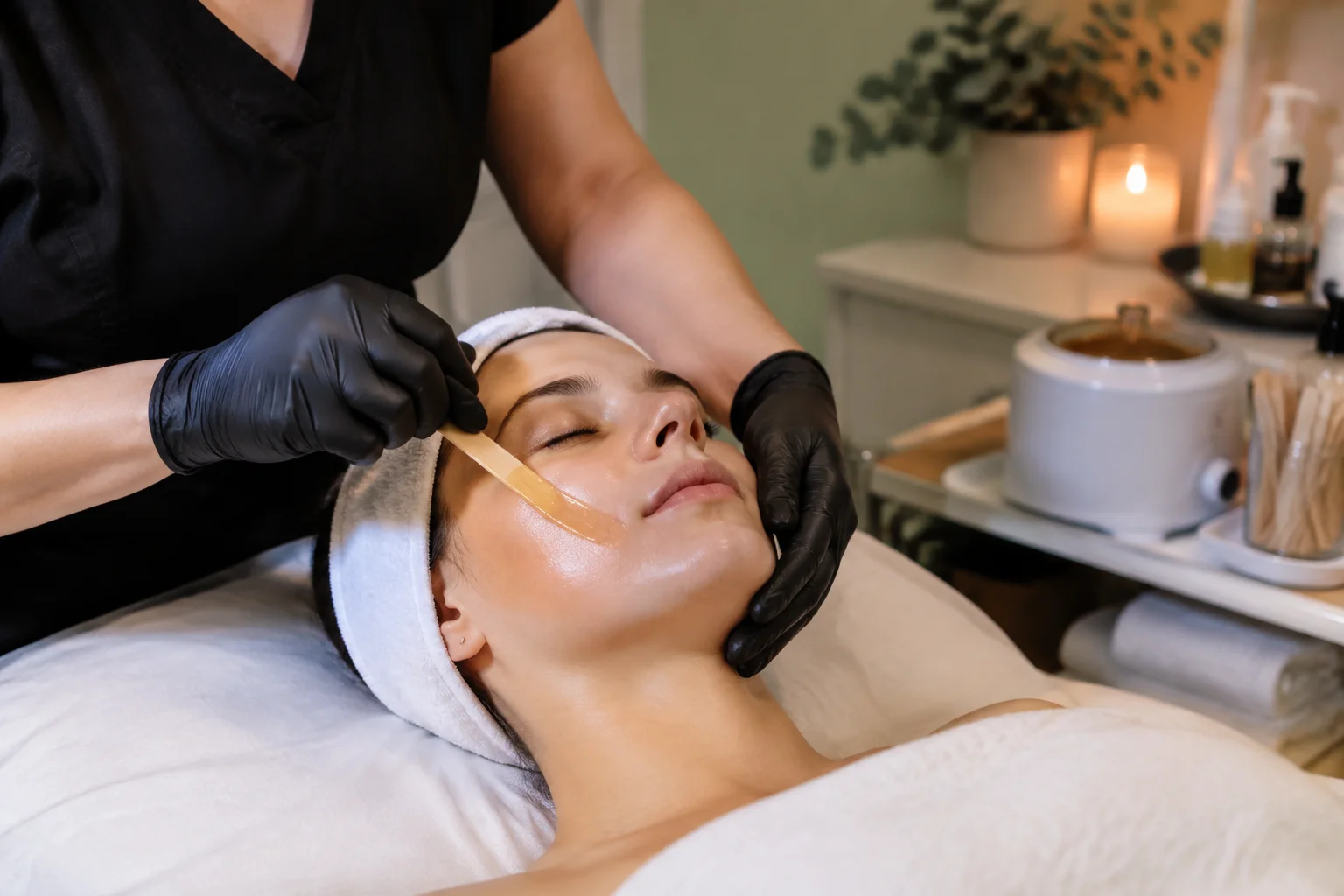
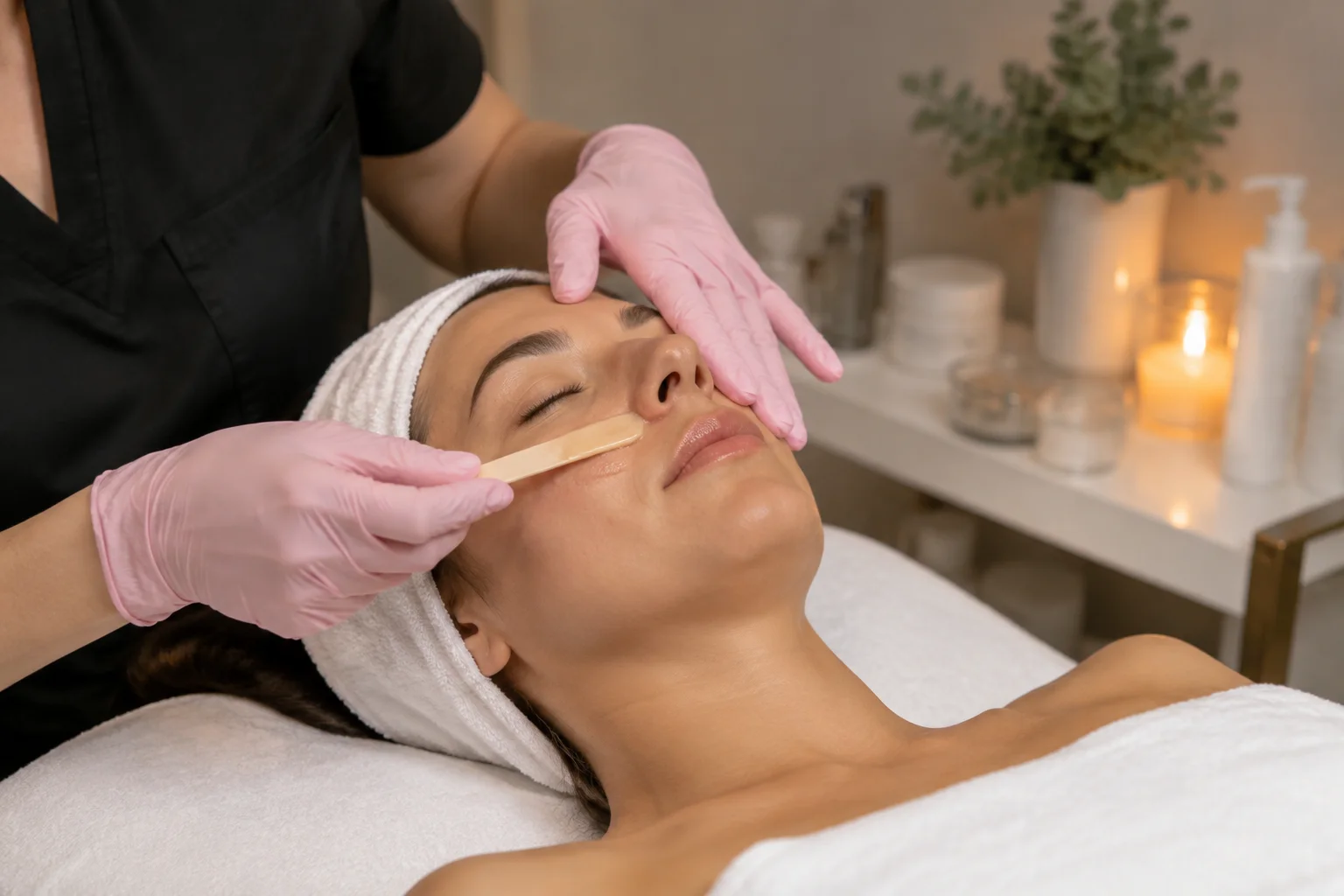
The skin is prepared, and wax is applied and removed in manageable sections. You can expect brief pulling or stinging sensations, with areas such as the upper lip often feeling more sensitive. Comfort varies from person to person. Speak up if something feels unusually hot, painful, or different from what you expected.
Some fine or short hairs may remain, and a careful approach is more important than repeatedly waxing the same patch to chase absolute smoothness. The appointment should finish with suitable post-wax care and instructions. A Hydrojelly Mask Add-On may be worth asking about, but suitability depends on your skin and the product ingredients, not simply on wanting an extra soothing step.
Keep the first days simple
The first 24 to 48 hours
Mild redness and sensitivity can occur immediately after waxing. A cool, clean compress may help with comfort. Avoid touching or picking at the area, and use a gentle cleanser and a simple moisturizer that does not sting. Follow the specific aftercare instructions you receive.
For the first day or two, avoid scrubs, exfoliating acids, retinoids, very hot water, saunas, and activities that create heavy sweating or friction. Avoid makeup immediately afterward, ideally for at least 24 hours and longer if irritation remains. Postpone swimming while the skin is sensitive. In Tucson, an indoor, low-key afternoon may be a better post-wax plan than a hot outdoor workout.
Returning to your usual routine
Restart active products only when the skin is calm and according to your provider's guidance. If redness or stinging persists, do not use the calendar alone to decide that you are ready. Waxing is not a reason to add more exfoliation, particularly when your routine already includes products aimed at acne or uneven texture.
Increasing pain, blistering, raw skin, spreading redness, or drainage are not routine aftercare issues. Contact the business and seek medical advice promptly when appropriate. Avoid trying to fix a significant reaction with additional acids, fragranced products, or aggressive spot treatments.
Find a maintenance rhythm that suits your skin
Many clients consider appointments roughly every four to six weeks, but that is a starting point rather than a requirement. Facial areas can regrow at different rates. Your comfort with visible regrowth, sensitivity, budget, and other skincare appointments should all help determine the interval.
Avoid scheduling another wax just because a few hairs have appeared. The skin needs to be healthy, and the hair needs enough length for effective removal. If hair growth suddenly becomes much heavier or changes alongside other symptoms, consider discussing it with a healthcare professional. Waxing manages visible hair; it does not address an underlying hormonal cause.
The best routine is one you can maintain without repeatedly irritating your skin. Our article on a more personal approach to full face waxing in Tucson explores why individual preferences and skin history matter.
Planning your visit to Heather's Luminous Esthetics
If you are comparing full face waxing options near you in Tucson, look beyond the promise of smooth skin. Clear screening, realistic expectations, attention to your skincare products, and useful aftercare guidance all matter. Personalized care may mean adjusting areas, changing timing, or postponing when your skin needs a break.
Review the Full Face Wax service at Heather's Luminous Esthetics when you are ready to plan your visit. A $10 deposit is required for new clients. Bring your questions and product list so your waxing schedule can work with your skincare goals and the realities of life in the desert.
Book Full Face Wax in Tucson, AZ
If you are looking for Full Face Wax in Tucson, AZ, visit our service page or contact us to schedule your appointment.
Serving Clients in Tucson, AZ
Heather's Luminous Esthetics proudly serves clients throughout Tucson, AZ.
Frequently Asked Questions
How long do full face waxing results usually last?
Can I get a full face wax if I use retinol or prescription acne medication?
Should I schedule a full face wax right before an outdoor Tucson event?
Related Articles
Article Gallery